

One of the first questions beginners ask when making purses or bags from upholstery leather is logical, and often wrong:
“Should I just use thicker leather so the bag doesn’t collapse?”
It sounds right. In reality, thickness alone rarely solves the problem and often creates new ones. Upholstery leather behaves differently than traditional bag leathers, and understanding that difference is the key to making bags that hold their shape and age well.

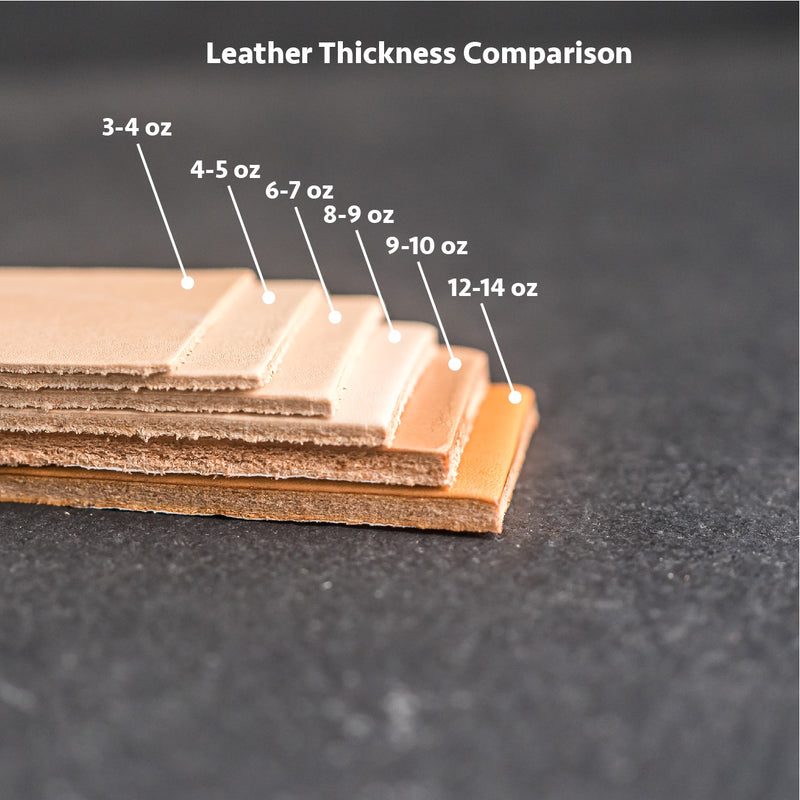
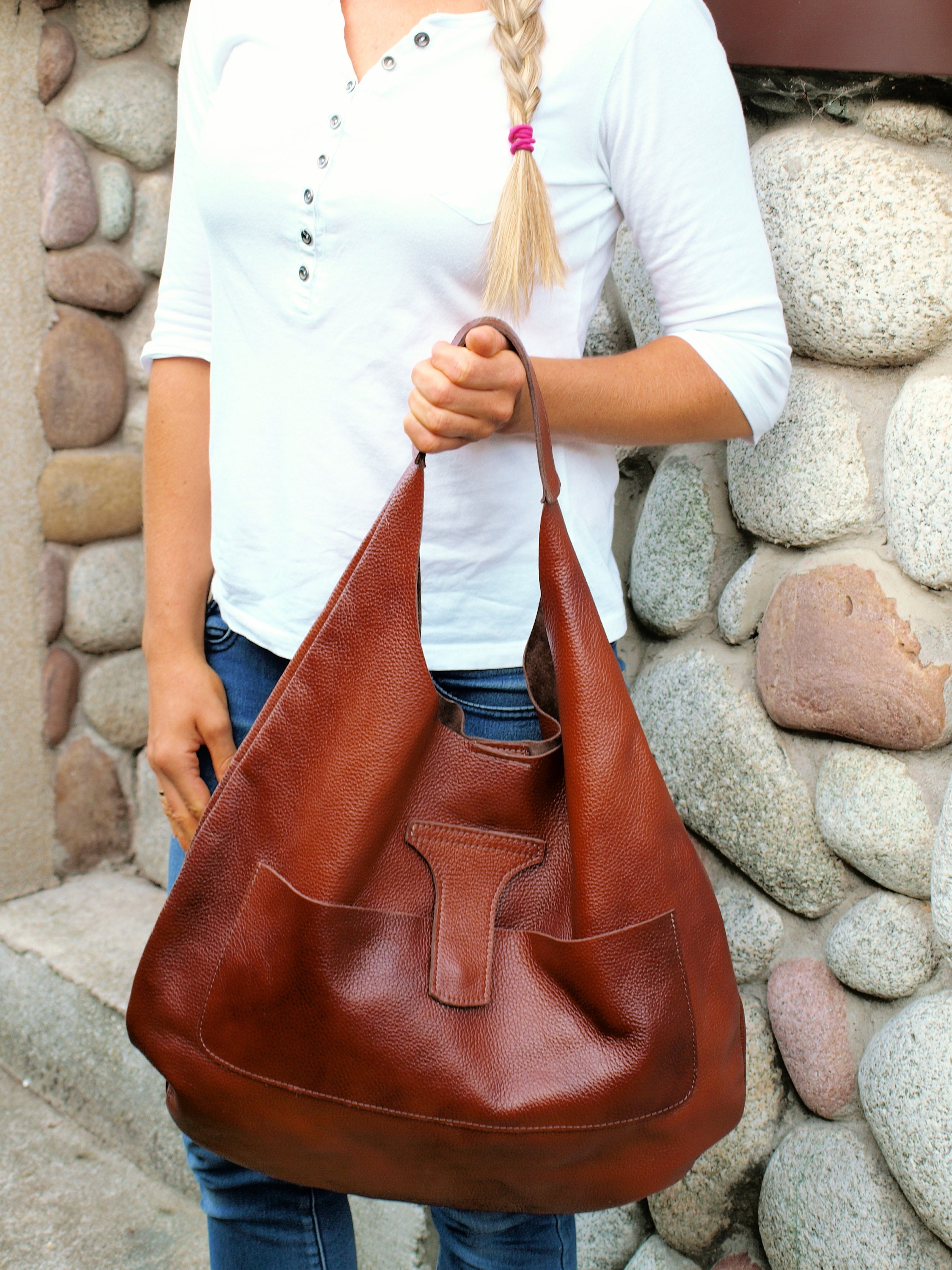
Understanding Upholstery Leather Thickness
Upholstery leather is usually measured in ounces (oz) or millimeters (mm), just like other leathers. Common upholstery weights fall between:
-
3–4 oz (1.2–1.6 mm) – very soft, drapey
-
4–5 oz (1.6–2.0 mm) – flexible but more substantial
-
5–6 oz (2.0–2.4 mm) – heavier upholstery hides
Unlike veg-tan or bridle leather, upholstery leather is typically chrome-tanned and designed to bend, flex, and stretch. Thickness adds weight, but not necessarily structure.
The Sweet Spot: Best Thickness for Most Bags
For most purses, totes, and everyday bags, the ideal upholstery leather thickness is 4–5 oz (1.6–2.0 mm).
Why this range works:
-
Thick enough to feel substantial
-
Thin enough to sew cleanly
-
Flexible without being flimsy
-
Easier to layer with reinforcement
This thickness lets the leather act as an outer skin while internal layers provide the strength and shape.
Why Thicker Leather Doesn’t Automatically Mean More Structure
Here’s the hard truth: soft leather stays soft, even when it’s thick.
A 6 oz upholstery hide can still:
-
Slouch
-
Stretch at stress points
-
Sag at the bottom
-
Collapse when empty
That’s because structure comes from fiber stiffness, not just thickness. Upholstery leather fibers are engineered for comfort and durability—not rigidity.
So what happens when beginners go thicker?
The Problems with Going Too Thick
1. Sewing Becomes a Fight
Thicker upholstery leather:
-
Creates bulky seams
-
Overwhelms home sewing machines
-
Skips stitches at layered intersections
Thick + soft = compression, not stability.
2. Bags Look Heavy but Still Slouch
This is the worst outcome. You get:
-
A heavy bag
-
No shape retention
-
Sagging sides anyway
Now it’s uncomfortable and unattractive.
3. Straps and Handles Stretch Faster
Thicker soft leather stretches under load. Without reinforcement, heavier leather actually accelerates strap failure.
4. Corners and Gussets Get Messy
Thick upholstery leather doesn’t crease cleanly. Corners bunch, gussets wrinkle, and the bag loses clean lines.
Structure Comes from Layers, Not Bulk
Professional bag makers don’t rely on leather thickness alone. They build structure deliberately.
Better solutions than thicker leather:
-
Canvas or cotton twill liners
-
Fusible stabilizers (Decovil Light, similar products)
-
Reinforced base panels
-
Internal strap supports
This approach keeps the bag lighter, stronger, and better-looking.
When Thicker Upholstery Leather Does Make Sense
There are a few limited cases where thicker upholstery leather works well:
-
Small pouches or clutches
-
Unlined minimalist designs (with reinforced edges)
-
Accent panels, not full bag bodies
-
Structured bases paired with softer sides
Even then, thickness works best when combined with smart design—not used as a shortcut.
A Traditional Rule That Still Holds
Old-school leather workers understood this long before modern materials:
You don’t make something stronger by making it heavier.
You make it stronger by controlling how it carries load.
Upholstery leather rewards that mindset. Treat it like fabric with strength, not armor with flexibility.
Bottom Line
If you want a bag that:
-
Holds its shape
-
Wears well over time
-
Doesn’t fight your sewing machine
Choose 4–5 oz upholstery leather and build structure underneath it. Thicker leather won’t save a poorly supported design—and often makes it worse.