

If your upholstery leather pieces look uneven before you ever touch the sewing machine, the problem usually isn’t your stitching, it’s your cutting.
Soft leather magnifies cutting mistakes. A slightly wavy edge turns into a crooked seam, misaligned panels, and a bag that never quite looks “right.” Clean edges start with the right cutting tool, not a steady hand alone.

Why Upholstery Leather Is Harder to Cut Than It Looks
Upholstery leather:
-
Is soft and compressible
-
Has surface coatings that resist blades
-
Stretches when pressure is uneven
That means cutting tools that work fine on fabric often fail on leather. The leather doesn’t just cut—it moves.
Scissors: Why They’re Usually the Wrong Tool
Let’s get this out of the way.
Scissors are tempting because they’re familiar. Unfortunately, they cause more problems than any other cutting method.
What Goes Wrong with Scissors
-
They lift and bend the leather while cutting
-
The blades squeeze before they cut
-
Soft leather stretches between the blades
-
Edges come out jagged or wavy
Even sharp scissors create a slight zig-zag edge because the leather compresses and releases as you cut.
When Scissors Are Acceptable
-
Very thin leather scraps
-
Rough trimming before final cuts
-
Areas that will be hidden or turned
For bag panels, straps, and visible edges—scissors are a mistake.
Utility Knife or Craft Knife: The Traditional Workhorse
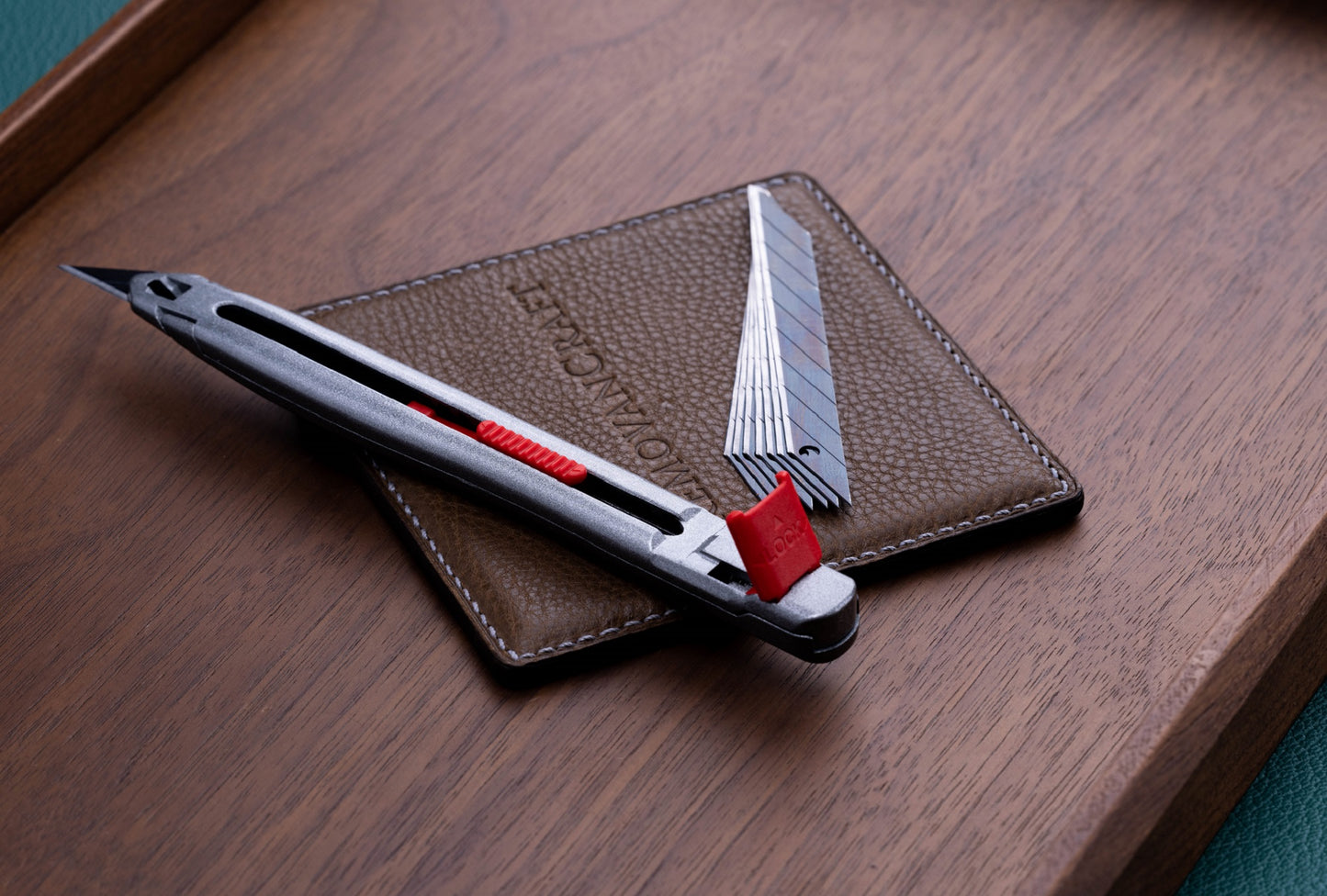
A straight-blade knife has been used in leather shops forever—and for good reason.
Pros
-
Clean, straight cuts
-
Excellent control on thick or firm leather
-
Ideal for long straight edges
Cons
-
Requires a steady hand
-
Curves take practice
-
Blades dull quickly on finished leather
Best Practices
-
Always use a fresh blade
-
Cut in multiple light passes
-
Use a metal ruler for straight edges
For accuracy, knives still set the standard.
Rotary Cutters: The Modern Favorite for Upholstery Leather
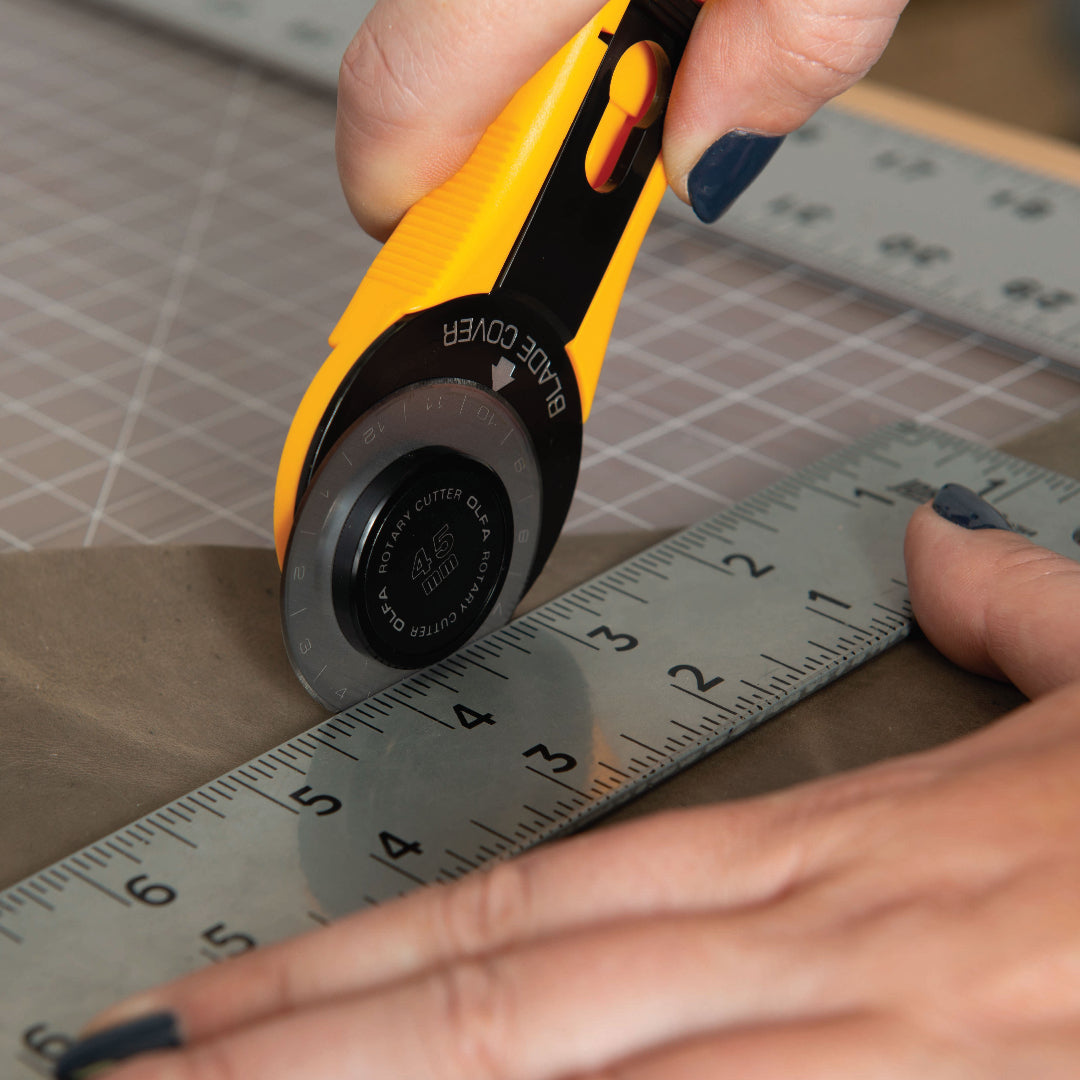
Rotary cutters are often the best choice for upholstery leather, especially for bag work.
Why Rotary Cutters Work So Well
-
The blade rolls instead of drags
-
Leather stays flat on the cutting mat
-
Even pressure reduces stretch
-
Curves are easier to control
This is why many professional bag makers reach for a rotary cutter first.
Types of Rotary Cutters (and When to Use Each)
28 mm Rotary Cutter
-
Small, highly maneuverable
-
Excellent for curves and small pieces
-
Less power on thick leather
Best for detail work and tight shapes.
45 mm Rotary Cutter (Most Common)
-
Best all-around size
-
Handles most upholstery leather thicknesses
-
Good balance of control and power
If you buy one rotary cutter, this is the size.
60 mm Rotary Cutter
-
Heavy-duty cutting
-
Ideal for long straight cuts and thick leather
-
Less control on curves
Great for straps and large panels—but overkill for small work.
Blade Quality Matters
Use premium blades. Cheap blades drag, tear coatings, and leave fuzzy edges. Finished upholstery leather dulls blades fast—change them often.
Cutting Surface Matters More Than You Think
Always cut on:
-
A self-healing cutting mat
-
Firm, flat support underneath
Never cut leather in the air or on soft surfaces. Leather must stay flat to cut cleanly.
Common Beginner Cutting Mistakes
-
Trying to cut in one heavy pass
-
Using dull blades to “save money”
-
Freehanding long straight edges
-
Letting leather hang off the table while cutting
Leather remembers every mistake you make at this stage.
A Traditional Rule That Still Holds
Old leather workers understood this instinctively:
Cutting is shaping. Sewing is just joining.
If the cut is wrong, the project is already compromised.
Bottom Line for Part 6
For clean, professional edges on upholstery leather:
-
Avoid scissors for visible cuts
-
Use a knife for precision and straight lines
-
Use a rotary cutter for control and consistency
-
Change blades more often than you think you should
In Part 7, we’ll tackle a common frustration:
Why upholstery leather edges won’t burnish like veg-tan—and what to do instead.